

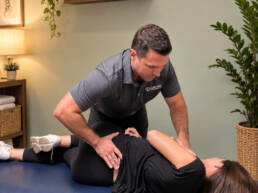
Chiropractic Adjustments in Sarasota
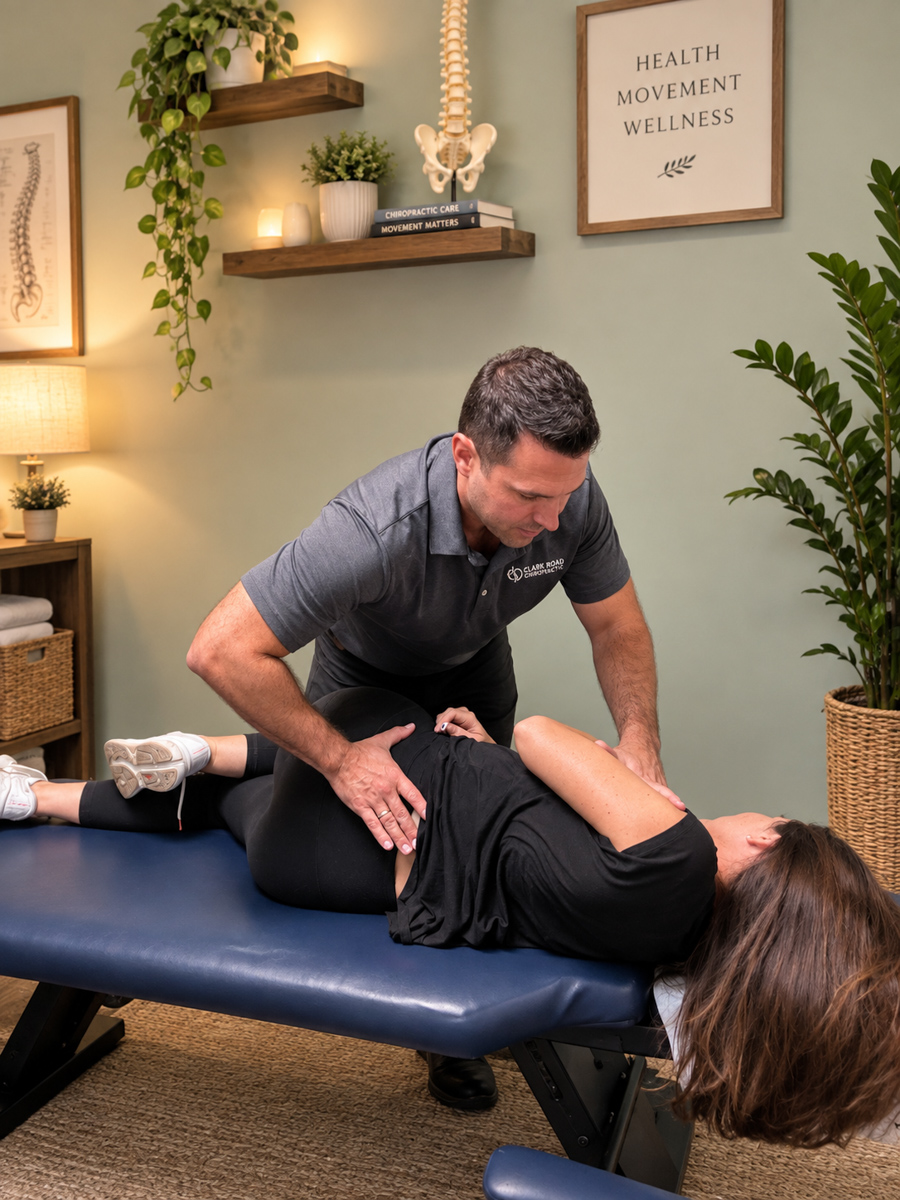
A chiropractic adjustment is a precise, hands-on correction to a joint that isn’t moving as it should. Performed well, it is comfortable, it restores motion, relieves the muscle tension that builds around a restricted joint, and gives your body a better opportunity to heal.
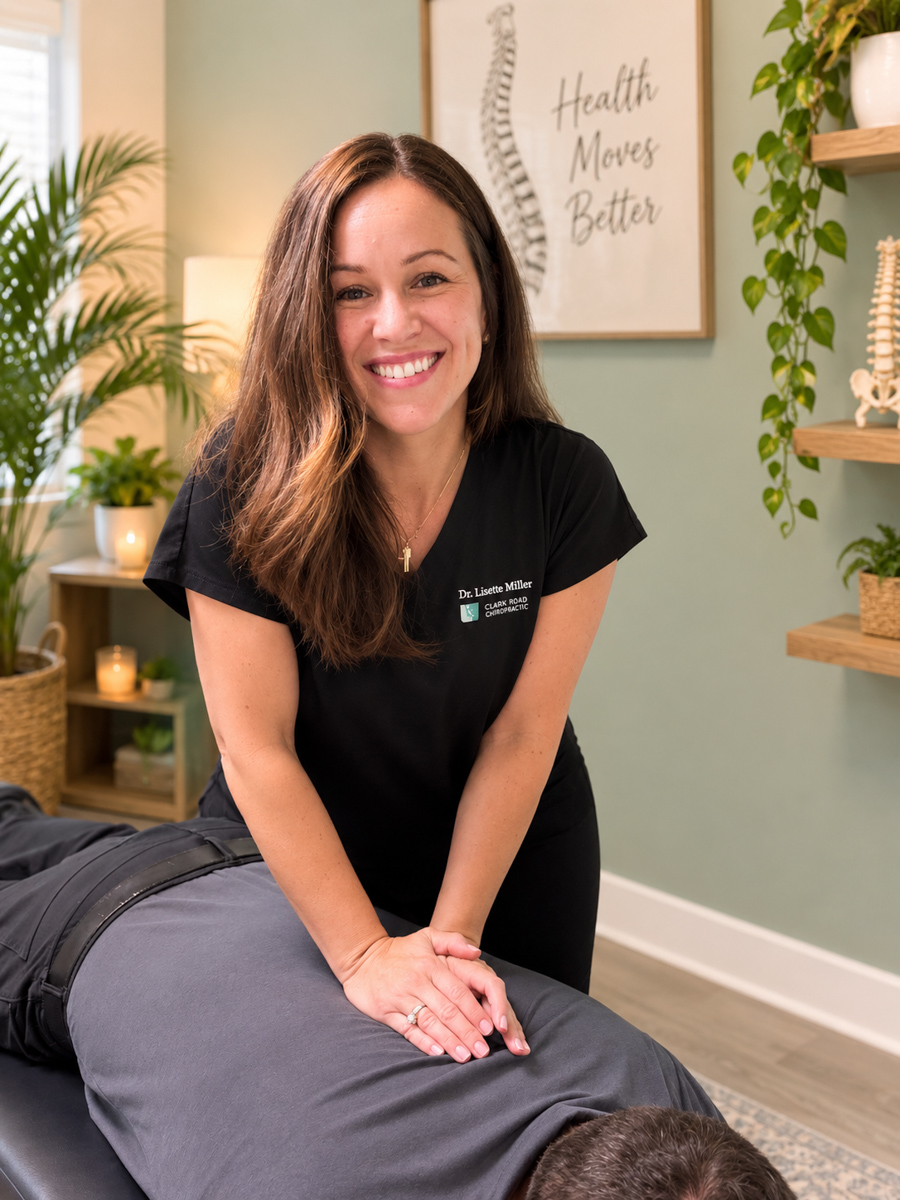
Both of our doctors are Palmer-trained, with more than a decade in practice, and they perform every adjustment themselves. Before treatment begins, we take a complete history, perform orthopedic testing, and take X-rays on site when they’re indicated, so the technique we choose fits your body and your condition.
Chiropractic Adjustment Techniques Matched to You
Chiropractic care is specific to you. Our doctors are trained in a range of techniques and select them based on your age, comfort, the area being treated, and the findings from your exam. We often combine techniques within a single visit, and your preferences are always part of that decision. It is your body, your health, your care!
Diversified
The classic hands-on technique most people associate with chiropractic. A quick, controlled movement restores normal motion to a restricted joint, and it’s effective for many back and neck conditions.
Gonstead
A highly specific approach that relies on careful analysis of your X-rays and spine before adjusting. Each correction targets one segment at a time, making it well suited to cases that call for precision.
Thompson Drop
Uses a treatment table with sections that drop slightly as the adjustment is delivered. Because the table assists the movement, less force is required.
Toggle Recoil
A precise, light thrust followed by an immediate release, most often used for the upper neck. It’s a specific, low-force option for patients who prefer a gentler approach to cervical care.
Activator
A small handheld instrument delivers a quick, low-force impulse to a specific point. It’s one of our preferred options for gentle care, for patients who prefer no twisting, and for children.
Cox flexion-distraction
A slow, rhythmic form of traction performed while you lie face down on a specialized table. It gently opens the spaces between the vertebrae and is especially useful for compressed discs, pinched nerves, and sciatica. Learn more about our herniated disc care and sciatica relief.
Gentle Chiropractic Care When You're in Significant Pain
One of the most common things we hear is, “I’m in too much pain to see a chiropractor right now.” That’s often when gentle care helps most. If you arrive with a muscle spasm or an acute flare-up, we won’t push your body further than it’s ready to go. We begin with low-force techniques such as Activator and flexion-distraction, add therapies that calm the area, and reserve more hands-on work until your body is ready.
You’re always part of the decision. If a technique doesn’t feel right, tell us, and we’ll use another.
Extremity Adjustments for the Upper and Lower Body
Chiropractic care isn’t limited to the spine. Joints in the arms and legs become restricted too, particularly after an injury or years of repetitive use. Our doctors adjust the hips, knees, ankles, and feet, as well as the shoulders, elbows, and wrists, and they often treat these areas alongside the spine because the problems are connected. Shoulder and neck tension, for example, frequently appear together.
Extremity care is commonly part of the plan for plantar fasciitis, carpal tunnel syndrome, tendonitis, and rotator cuff injuries. Athletes and active adults benefit especially. See how it fits into our sports injury chiropractic.
What Happens During an Adjustment Visit
After your first visit, a typical adjustment appointment follows the same steps:
- A check-in on your progress. We ask what has changed since your last visit and reassess the areas we’re treating.
- Soft-tissue preparation. Tight muscles resist adjustments, so we often begin with soft-tissue work or a therapy such as moist heat to loosen the area.
- The adjustment. Your doctor delivers the adjustment using the technique, or combination of techniques, best suited to you.
- Rehab where appropriate. Depending on your phase of care, that may include electric muscle stimulation, cold therapy, stretching, or exercises.
- A conversation about your daily habits. We look for the habits behind your pain, from workstation setup to sleeping position, because we see you for only a small part of your week.
Ready to move well again? We reserve time for patients in pain. Ask about same-day chiropractic appointments, or call 941-923-4357.



Rehab and Soft-Tissue Therapies That Help Adjustments Last
An adjustment restores motion. These therapies help that motion last. Which ones you receive depends on your phase of care.
Electric muscle stimulation
Mild electrical pulses that help relax tight, guarded muscles and ease pain, most often used in the first phase of care.
Moist heat and cold therapy
Moist heat relaxes tight muscles before treatment, while cold therapy calms inflammation after an injury or flare-up.
Graston technique
Stainless steel instruments glide over the skin to locate and break up restricted, scarred soft tissue, improving how muscles and tendons move.
Cupping therapy
Suction cups gently lift the skin and underlying tissue, which can loosen tight muscles and increase blood flow to the area.
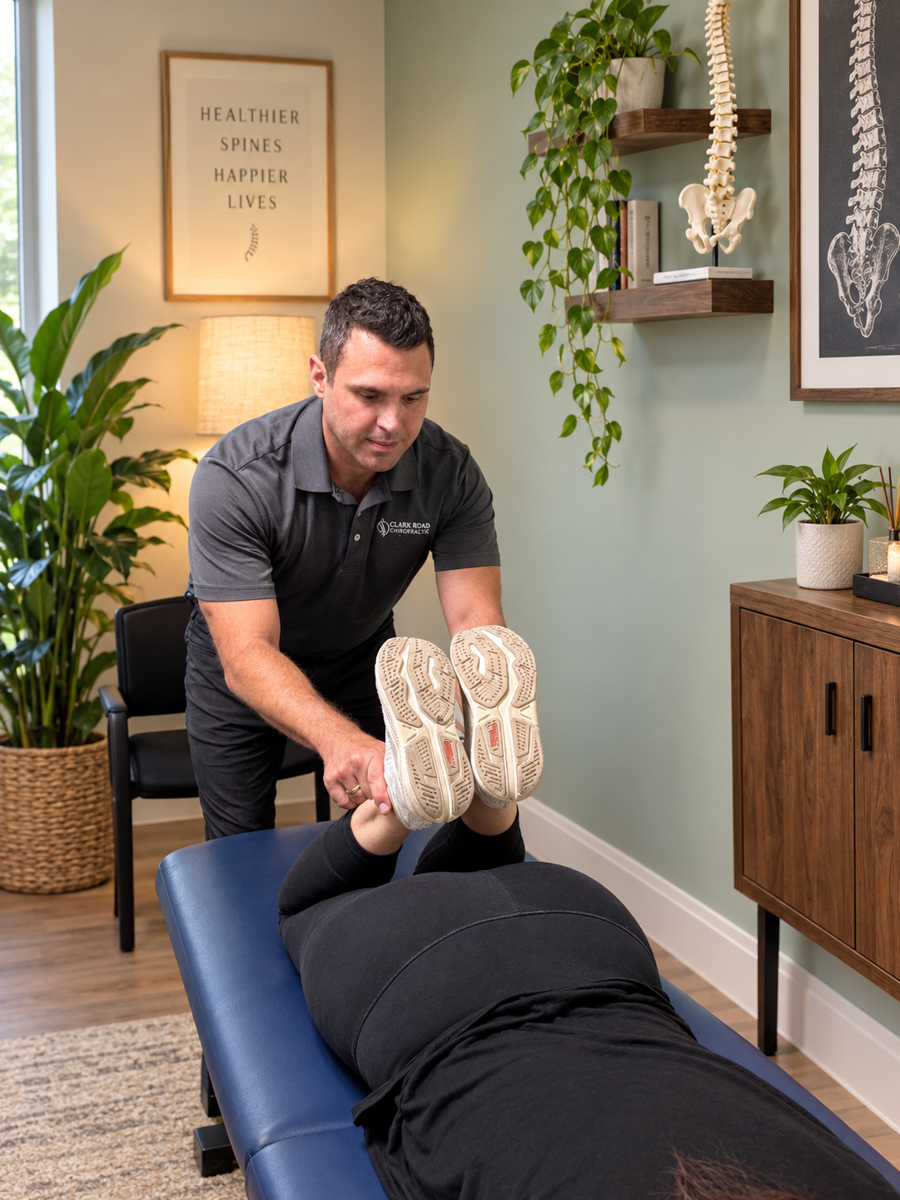
PNF stretching
A clinical stretching method that alternates gentle muscle contraction with relaxation, allowing a deeper, more effective stretch than a standard hold. Many patients also add one-on-one assisted stretching and Active Release Technique.
Kinesio tape
Flexible therapeutic tape that supports muscles and joints without restricting movement, often used between visits or for athletes returning to their sport.
Therapeutic rehab and postural training
Targeted core strengthening, neck and low back exercises, and posture training build the strength and stability your body needs to hold its corrections on its own.
Common Reasons Patients Come In for an Adjustment
Adjustments are part of the plan for most of the conditions we see. Learn more about each:
- Low back pain treatment, the most common reason patients call us
- Neck pain treatment, including stiffness from screens and desk work
- Headache and migraine treatment, particularly headaches that originate in the neck
- Muscle pain, spasms, and strains anywhere in the body
Why Patients Choose Clark Road for Chiropractic Adjustments
- Your doctor performs every adjustment. Every adjustment is delivered by Dr. Kondrad or Dr. Miller, never handed off to a machine or an assistant.
- Proven techniques, not gadgets. We rely on methods we know work, and we bill only for the care you receive that day.
- Training that shows. Both doctors graduated from Palmer College of Chiropractic, and Dr. Kondrad received its Clinical Excellence Award.
- Treatment begins on day one. After your first exam, you’ll usually be adjusted the same day.
- In network with most plans, including Medicare. See if we’re a chiropractor that takes insurance in Sarasota on your plan.
Chiropractic Adjustment FAQ
It restores normal motion to a joint that is restricted. When the joint moves properly, the surrounding muscles can relax, irritation to the nerve root subsides, and your body is better able to heal.
We often describe chiropractors as the mechanical engineers of the body because we are structurally impacting the body starting with the spine. Chiropractic adjustments move joints from a state of dis-ease to a state of ease, improving the structure of the spine and therefore improving the function of the nervous system.
That depends on your condition and how long it has been present. At your second visit, we’ll review our findings and give you a clear plan with an expected number of visits, which we update as you improve.
Usually, yes. We first screen for anything that requires a different kind of care, then use gentle, low-force techniques until your body is ready for more.
Some of our techniques use a handheld Activator or a specialized table, and we use tools such as Graston instruments for soft-tissue work. The adjustment itself is always delivered by your doctor.
If something has felt stiff, sore, or “off” for longer than it should, let’s find out why. Your first visit takes about an hour and usually includes your first adjustment.