


Herniated Disc Chiropractor in Sarasota
Learning you have a herniated or bulging disc can be unsettling, and it’s easy to assume surgery is the only option. For many people, it isn’t. Conservative care is the standard first step for most disc injuries, before injections or surgery, and many patients never need to go further.
Dr. Kris Kondrad understands this from personal experience. When he was injured playing basketball at 14, surgery was presented as an option. He chose conservative care instead, and that decision shaped his entire career. Today, our practice brings the same conservative philosophy to patients with disc injuries, focusing on relieving pressure, restoring movement, and building the strength that supports the spine.
Can a Chiropractor Fix a Herniated Disc?
The honest answer is that a chiropractor doesn’t push a disc back into place, and we won’t promise you that. What chiropractic care can do is relieve pressure on the disc and the adjacent nerve root, restore healthy movement to the spine, calm inflammation, and strengthen the supporting muscles. That creates the best possible conditions for your body to heal, and for many people it brings meaningful relief.
If your symptoms are severe or your exam reveals signs that warrant a surgeon’s opinion, we’ll tell you and refer you promptly.
Herniated, Bulging, and Degenerating Discs
Discs are the cushions between your vertebrae. Each has a tough outer ring and a softer, gel-like center. Here’s how the most common disc problems differ:
Bulging disc
The disc flattens and extends beyond its normal border, much like a tire that’s low on air. It may cause no symptoms at all, or it may press on nearby nerves.
Herniated disc
The tough outer ring tears, and some of the softer center pushes through. That material can irritate or compress a nerve root, often causing pain, numbness, or tingling down an arm or leg.
Degenerative disc disease
Over time, discs naturally lose water and height. That can lead to stiffness, arthritis in the adjacent joints, and less space for the nerves. Despite its name, it’s a common age-related change, not a disease that inevitably worsens.
Signs of a Disc Injury
- Low back or neck pain that worsens when you sit, bend, cough, or sneeze
- Pain that travels into a buttock, leg, shoulder, or arm
- Numbness, tingling, or a pins-and-needles sensation in a limb
- Weakness in a leg or arm
- Stiffness that’s worst in the morning or after sitting
If disc pain is traveling down your leg, read more about our sciatica relief. Experiencing back pain without leg symptoms? See our low back pain treatment, or browse the other conditions we help.
Cox Flexion-Distraction: Gentle Disc Care
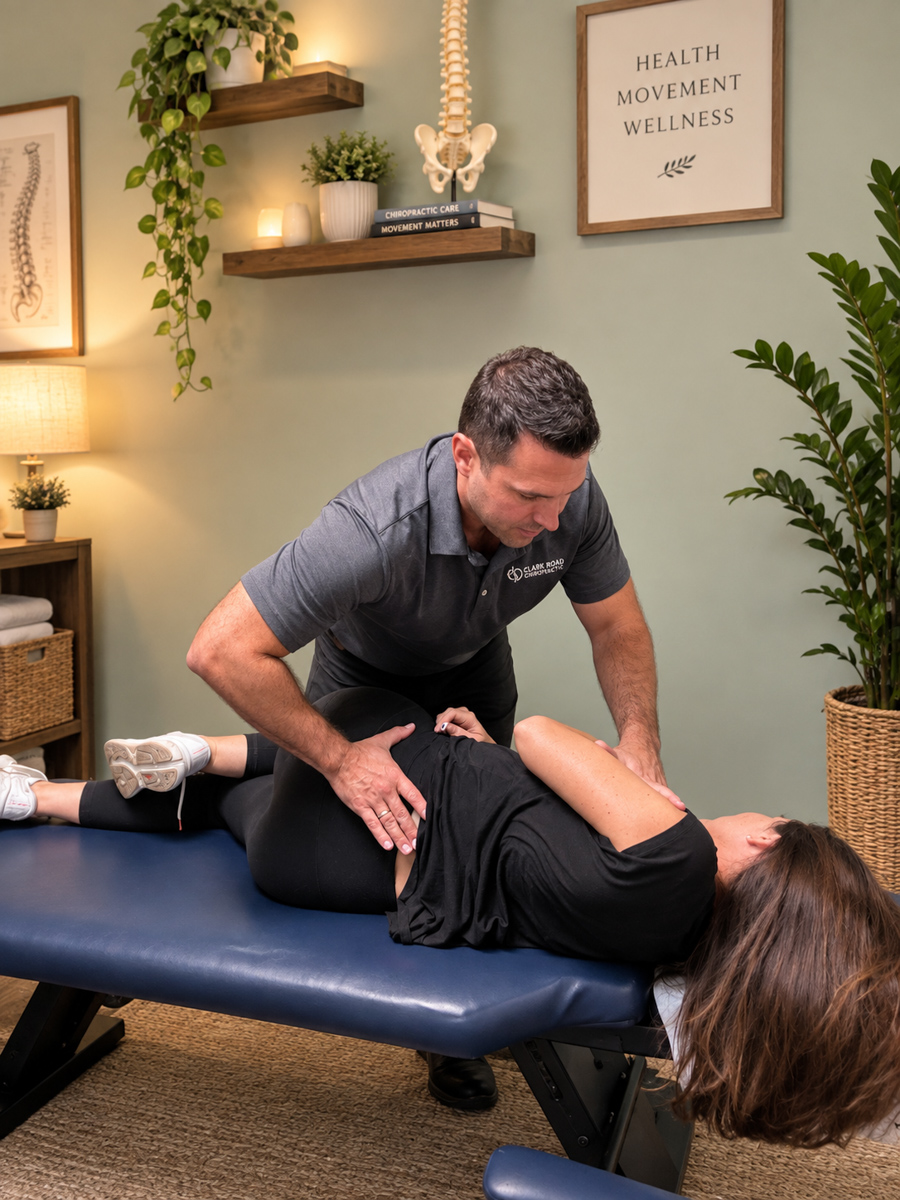
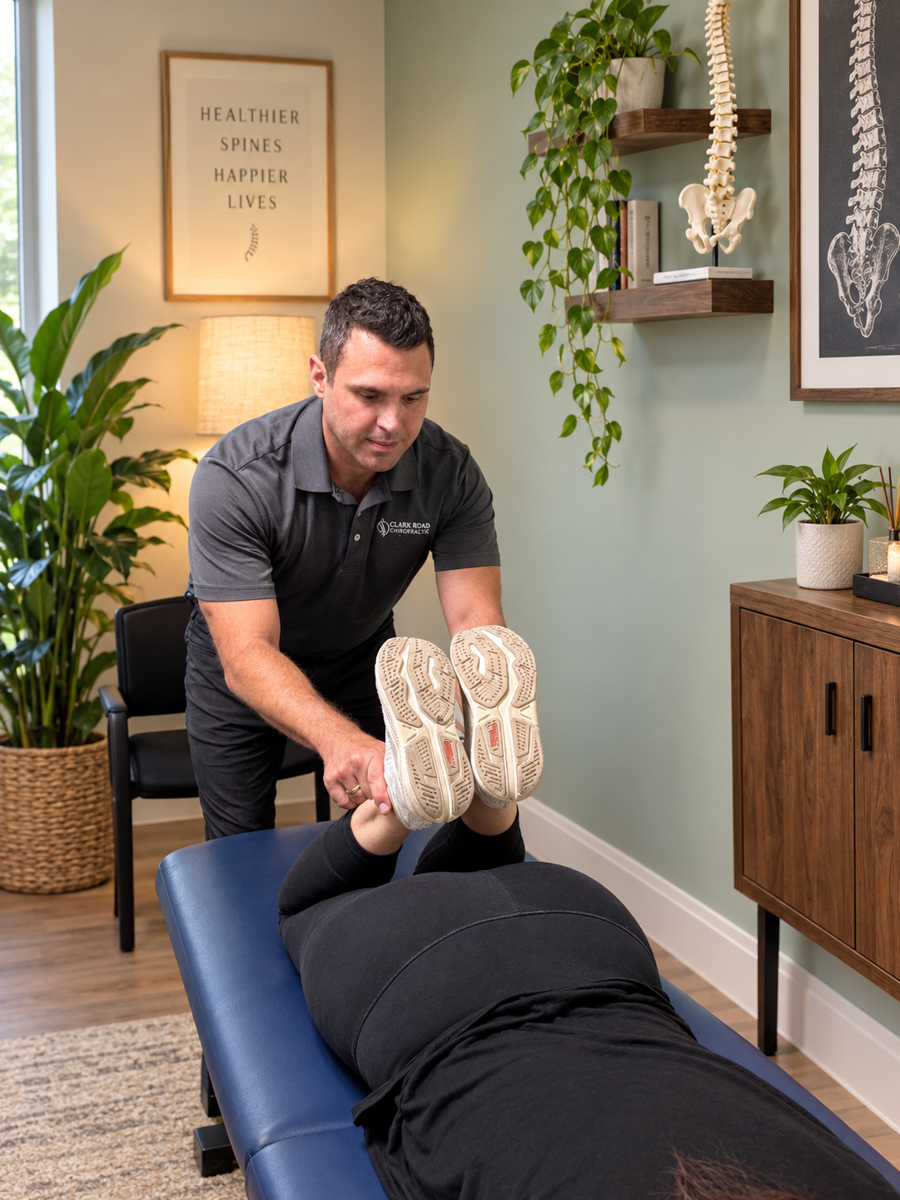
Our primary tool for disc injuries is Cox flexion-distraction, a gentle form of spinal traction. You lie face down on a specialized table that slowly and rhythmically flexes and moves the lower half of your body. That motion opens the space between the vertebrae, which can reduce pressure within the disc and relieve pressure on irritated nerves.
Most patients find flexion-distraction comfortable, and many find its slow, steady rhythm relaxing. There’s no quick twisting or popping, which makes it well suited to a disc that’s inflamed and painful.
Living with disc pain? Call 941-923-4357, or ask about same-day chiropractic appointments.




Our Herniated Disc Treatment Plan
Disc care follows our three phases, adapted to how irritated the disc is.
Phase 1: Calm and relieve pressure
Flexion-distraction, gentle low-force techniques, moist heat or ice, and electric muscle stimulation to calm inflammation and relieve pressure on the nerve.
Phase 2: Restore motion
As pain subsides, we add gentle chiropractic adjustments and mobility work so the rest of the spine moves well and the injured disc isn’t carrying the entire load.
Phase 3: Strengthen and protect
Core and hip stability exercises, posture training, and proper lifting habits help protect the disc over the long term.
What to Expect at Your First Visit
- History. How the pain began, what makes it worse, and any imaging or reports you already have.
- Exam. Orthopedic and neurological testing to assess reflexes, strength, and sensation, and to identify which movements aggravate the disc.
- X-rays. Taken on site when they’ll help. Please bring any MRI reports you have.
- Treatment. The same day when appropriate, often beginning with flexion-distraction.
- A plan. We explain what we found and what comes next.
Degenerative Disc Disease and Arthritis
Degenerating discs and spinal arthritis often occur together, and both are common with age. Care focuses on keeping the spine moving, easing stiffness, and strengthening the muscles that reduce load on the joints. We use gentle techniques suited to arthritic joints, and acupuncture can be a helpful addition for stiffness and aching.
Habits That Protect Your Discs
Discs bear load throughout the day. A few habits make a significant difference in how much stress they absorb:
- Break up sitting. Sitting places more pressure on low back discs than standing or walking. Get up every half hour.
- Hinge at the hips. Bend from the hips with a straight back rather than rounding forward to lift.
- Keep loads close. Hold heavy objects against your body and avoid twisting while carrying them.
- Walk daily. Gentle, regular walking helps nourish the discs and keeps the spine moving.
- Stay consistent with your exercises. Core strength is one of the best protections a disc can have.
Conservative Care First
Many of our disc patients come to us while waiting for an injection or an orthopedic consultation that’s weeks away. There’s no reason to wait in pain. Conservative care can begin now, and it works alongside medical care. If you ultimately need an injection or surgery, the work you do with us to stay mobile and strong will still benefit you.
Why Patients Choose Us for Disc Injuries
- A doctor who’s been there. Dr. Kondrad chose conservative care himself and understands the decision you’re weighing.
- Cox flexion-distraction on site. Gentle disc care with no quick twisting.
- Imaging when it helps. X-rays in the office, with referrals for advanced imaging when needed.
- Time with your doctor. One-on-one care at every visit.
- Honest answers. We’ll tell you if you need a surgeon’s opinion.
- In network with most insurance plans, including Medicare. Your benefits are reviewed before care begins.
Herniated Disc FAQ
Many do. A large number of people with disc injuries improve with conservative care and time. We’ll monitor your progress closely and refer you if your symptoms aren’t improving or are worsening.
Yes, when care is gentle and matched to the injury. That’s why we use low-force techniques such as flexion-distraction rather than forceful twisting on an inflamed disc.
You don’t need to avoid it entirely, but long periods of sitting often aggravate disc pain. Break it up with short walks, use a supportive chair, and avoid slouching into a deep couch while the disc is irritated.
Not always. Many disc injuries can be evaluated with a careful exam and X-rays. If your symptoms are severe or not improving, we’ll refer you for an MRI.
If you’ve been told you have a herniated or bulging disc, let’s discuss your options together.