
Assisted Stretching in Sarasota
Stretching on your own only goes so far. You can’t fully relax a muscle while you’re also using it to hold a stretch, and it’s difficult to know whether you’re targeting the right tissue at all. Assisted stretching addresses both problems. You relax while a trained practitioner guides your body through stretches you couldn’t achieve on your own.
Dr. Kris Kondrad is full-body certified in Active Release Technique (ART) and has about a decade of clinical stretch training, which shapes how we assess tight muscles, understand why they’re tight, and release them safely.
Our stretching program is grounded in clinical training. Sessions are led by Rani Myer, our licensed massage therapist, and both of our doctors build stretching into chiropractic care.
What Is Assisted Stretching?
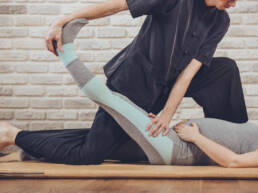
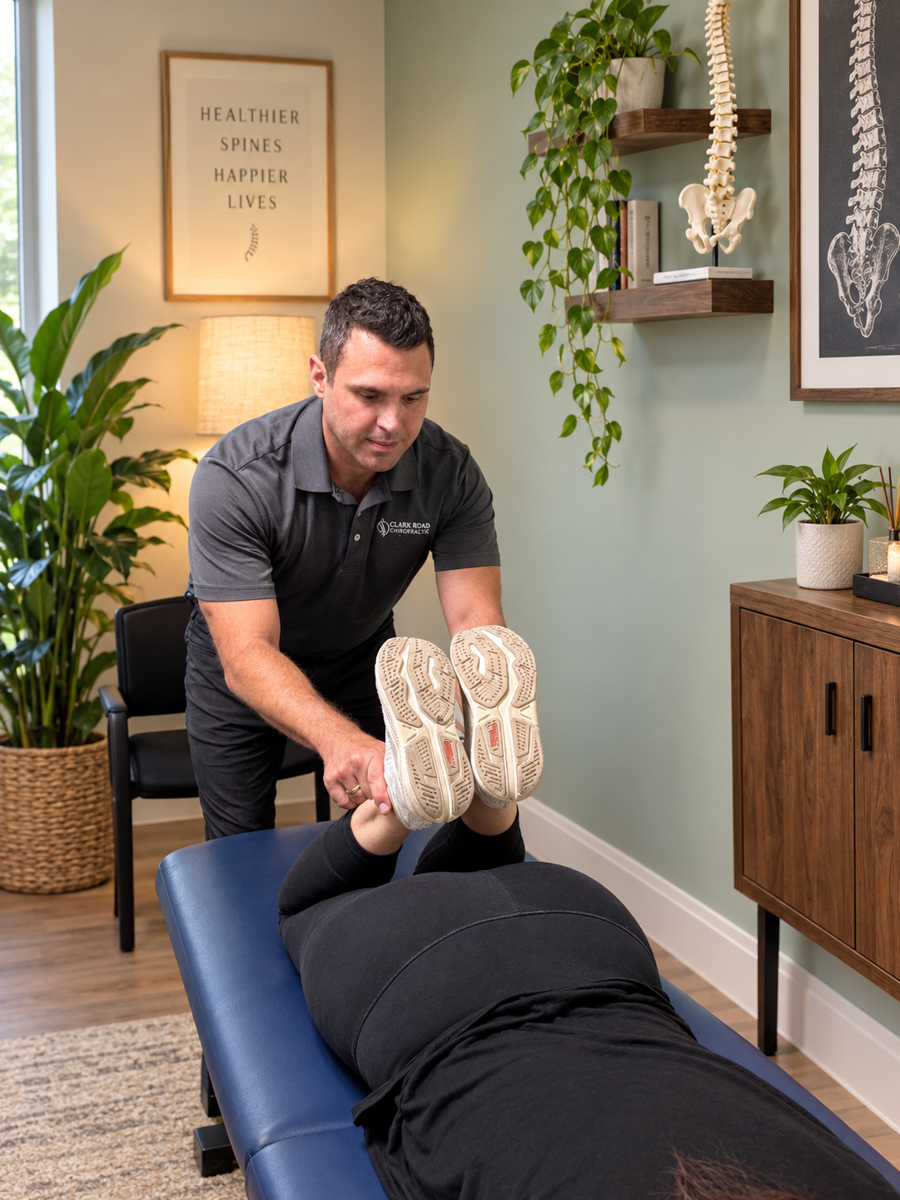
Assisted stretching is a one-on-one session in which a trained practitioner stretches your muscles for you, or with you, rather than you stretching alone. Because you aren’t working to hold each position, your muscles can relax more fully, and the practitioner can guide each stretch precisely for the best result.
At our office, every session lasts up to 30 minutes and combines two approaches:
- Passive stretching, where you relax completely while your body is moved into each position.
- Active stretching, where you engage specific muscles during the stretch to help them release and to build control through your new range of motion.
Who Leads Your Session
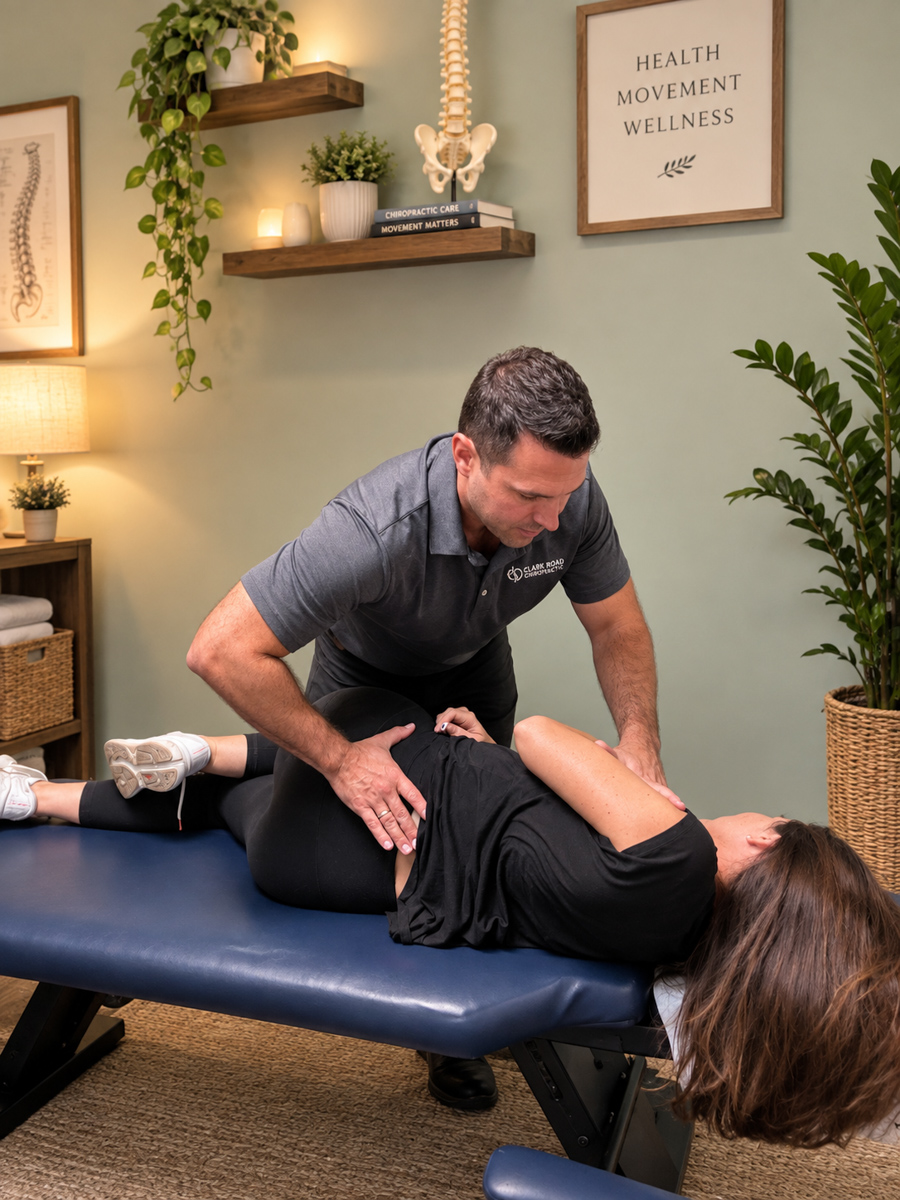
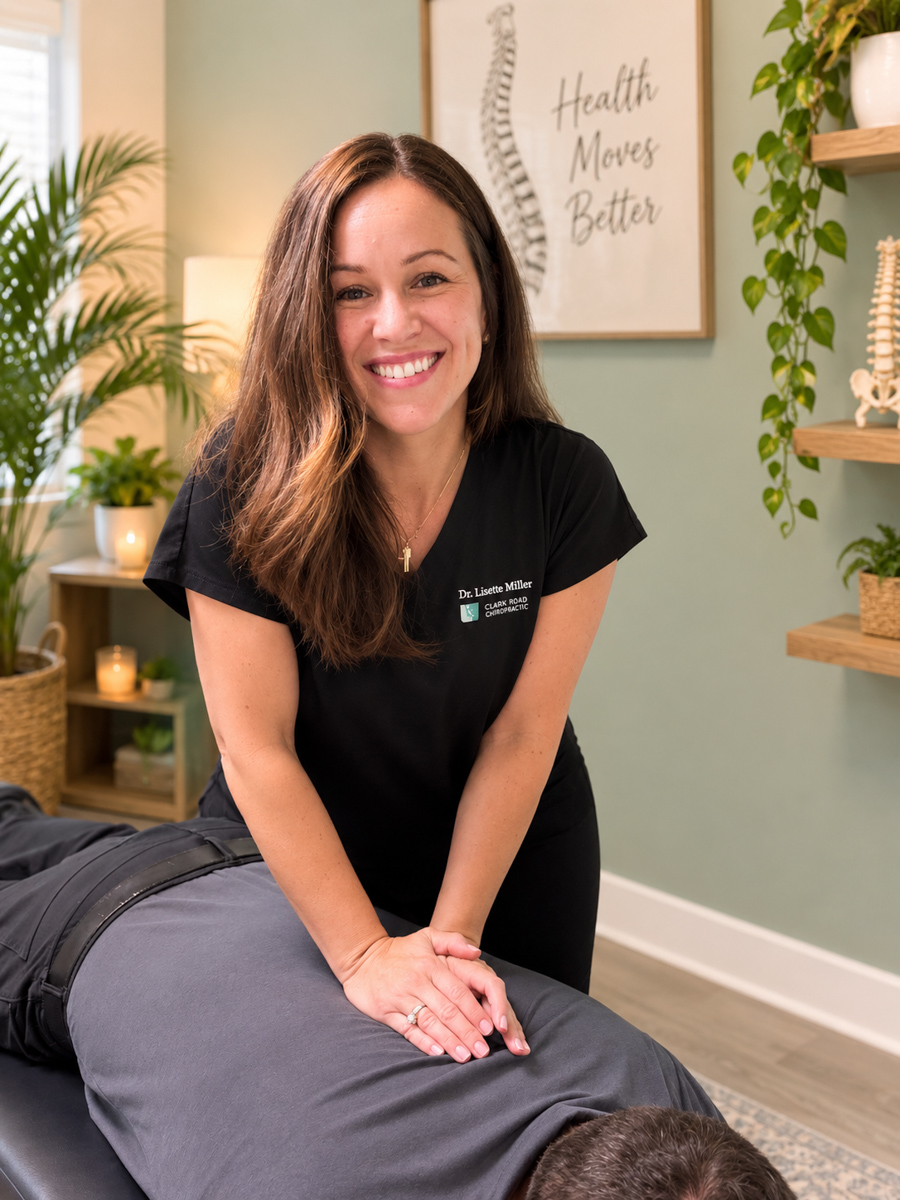
Your 30-minute assisted stretching sessions are led by Rani, a licensed massage therapist who has been part of our practice for years. Her training in soft-tissue techniques means she understands how muscles and fascia respond to stretching, and she works from the same plan as your doctor. When you’re also receiving chiropractic care, Dr. Kondrad or Dr. Miller incorporates targeted stretching and soft-tissue release into your treatment visits as well.
Why Clinical Training Matters in a Stretch Session
A stretch session in a chiropractic office starts with an assessment rather than a routine. Active Release Technique is a hands-on soft-tissue method for locating and releasing adhesions, the areas where muscle, tendon, and fascia have bound together after injury or overuse. Combined with years of clinical stretch training, that perspective means your care addresses both joint mobility and soft-tissue restriction.
Active Release Technique and PNF Stretching in Sarasota
Two methods form the foundation of our stretching care.
Active Release Technique (ART)
ART is a highly specific method for treating soft-tissue injuries and is widely used by elite athletes. The practitioner applies precise pressure to the affected tissue while you actively move the muscle through its range. That combination helps break up adhesions and restore smooth, pain-free movement. Patients familiar with ART often seek it out by name, and it’s one of the main reasons people come to us for stretching. The core goals of ART are to:
- Break down scar tissue and adhesions
- Reduce nerve entrapment
- Improve pain-free range of motion
PNF stretching
Proprioceptive neuromuscular facilitation, or PNF, uses a cycle of gentle muscle contraction followed by relaxation and a deeper stretch. Contracting the muscle first helps it release afterward, producing a greater gain in range of motion than a standard hold.
Ready to move better? Call 941-923-4357 to book a 30-minute stretch session, or ask about same-day chiropractic appointments if you’re dealing with pain first.



Who Assisted Stretching Helps
Desk workers and professional drivers
Long hours of sitting shorten the hip flexors, round the shoulders, and tighten the back of the neck. Regular stretch sessions help counteract what the workday does to your body.
Athletes and active adults
Flexibility and recovery affect both performance and injury risk. Stretching pairs well with our sports injury chiropractic for student athletes and active adults.
Patients recovering from an injury
After an injury, muscles often remain guarded and stiff even once pain has eased. Careful, guided stretching helps restore normal movement without pushing too far.
Anyone with chronic tightness or back pain
Tight hamstrings, hips, and low back muscles frequently accompany back pain. Stretching is part of our low back pain treatment for exactly that reason.
Signs You Could Benefit From Assisted Stretching
You don’t need an injury to benefit. Consider a session if any of these sound familiar:
- Your body feels older than you are.
- You wake up stiff, and it takes time to loosen up.
- Turning your head to check your blind spot takes effort.
- Bending over or getting dressed is uncomfortable.
- You stretch at home, but the tightness keeps returning.
- Your golf swing, tennis serve, or running stride feels restricted.
- You’re recovering from an injury and still don’t move the way you used to.
How Stretching Fits Your Care Plan
Our care moves through three phases, and stretching plays its most important role in the second.
- Initial care calms pain and inflammation with gentle chiropractic adjustments and passive therapies.
- Active care restores range of motion and healthy movement. This is where ART and PNF stretching come in, followed by strength and stability work.
- Maintenance keeps you moving well. Many patients continue regular stretch sessions after they graduate from active care.
Stretching also complements therapeutic massage. Massage releases tension in the tissue, and stretching restores the range of motion that tension was limiting. You can also see how stretching fits with the rest of our chiropractic services.
What to Expect in a 30-Minute Session
- A brief check-in. We ask what feels tight, what you’ve been doing, and what you’d like to focus on.
- Assessment. We test range of motion in the areas most relevant to your goals.
- Stretching. A combination of passive stretching, active stretching, and PNF, adjusted to how your body responds.
- Guidance for home. One or two things to do between visits to maintain your progress.
Wear comfortable clothing you can move in, such as athletic wear or loose pants. You’ll remain fully dressed throughout, and no special preparation is needed.
Is Assisted Stretching Worth It?
For most people with ongoing tightness, limited mobility, or slow recovery, yes. A guided session reaches muscles and ranges of motion you can’t reach alone, and a practitioner trained in anatomy can identify problems a generic routine would miss. The value lies in that expertise: a session with someone who understands why you’re tight is fundamentally different from a stretch that simply follows a list.
If you’ve already tried stretching at home with little improvement, that’s often a sign something else is limiting you, such as joint restrictions, scar tissue, or compensation patterns from an old injury. Identifying those factors is exactly what a clinically trained practitioner is looking for.
Assisted Stretching FAQ
During active care, sessions are usually scheduled alongside your other visits. Afterward, many patients book regularly to maintain their flexibility. We’ll recommend a schedule based on your goals.
It shouldn’t. You’ll feel a strong stretch, but never sharp pain. We communicate with you throughout and adjust our approach immediately if anything is uncomfortable.
Call us, and we’ll help you determine the best place to start. For many people, stretching is most effective as part of a broader plan that addresses why the tightness keeps returning.
If you’re tired of feeling stiff, let a clinically trained team help you move better.