


Neck Pain Chiropractor in Sarasota
Neck and upper back pain are among the most common problems we treat, and most cases share the same root cause: posture. How we sit, work, and look at screens throughout the day adds up. Hours at a computer, a phone held in your lap, a monitor positioned slightly too low or off to one side. None of it hurts at first. Then one day your neck is stiff, your shoulders are tight, and turning your head to check your blind spot takes effort.
The encouraging news is that this kind of neck pain responds well to chiropractic care. Reducing stress on the spine and improving posture make a meaningful difference, and we can help you do both.
The Anatomy Doesn't Lie
Dr. Kondrad has a habit that surprises new patients. Simply by feeling which muscles are tight in someone’s neck and upper back, he can often tell which side their computer monitor sits on. It isn’t a trick; it’s anatomy. When you turn your head in the same direction for eight hours a day, the muscles on that side adapt, and they tell the story.
That’s how we approach every case of neck pain. We look for the mechanism of injury, the daily pattern that’s loading your neck incorrectly, because treating the pain without changing the pattern only buys a few good days.
What Causes Text Neck?
Text neck is strain in the neck and upper back caused by looking down at phones, tablets, and laptops for extended periods. Your head weighs about as much as a bowling ball. When it tips forward, the muscles at the back of your neck and between your shoulder blades must work much harder to support it. Over time, that can lead to:
- A stiff, aching neck, particularly at the end of the day
- Tight, sore muscles across the tops of the shoulders
- Pain between the shoulder blades
- Headaches that begin at the base of the skull
- Rounded shoulders and a forward head posture
Neck Pain Treatment Tailored to You
Your plan depends on what we find, but it usually combines several of the following.
Neck adjustments
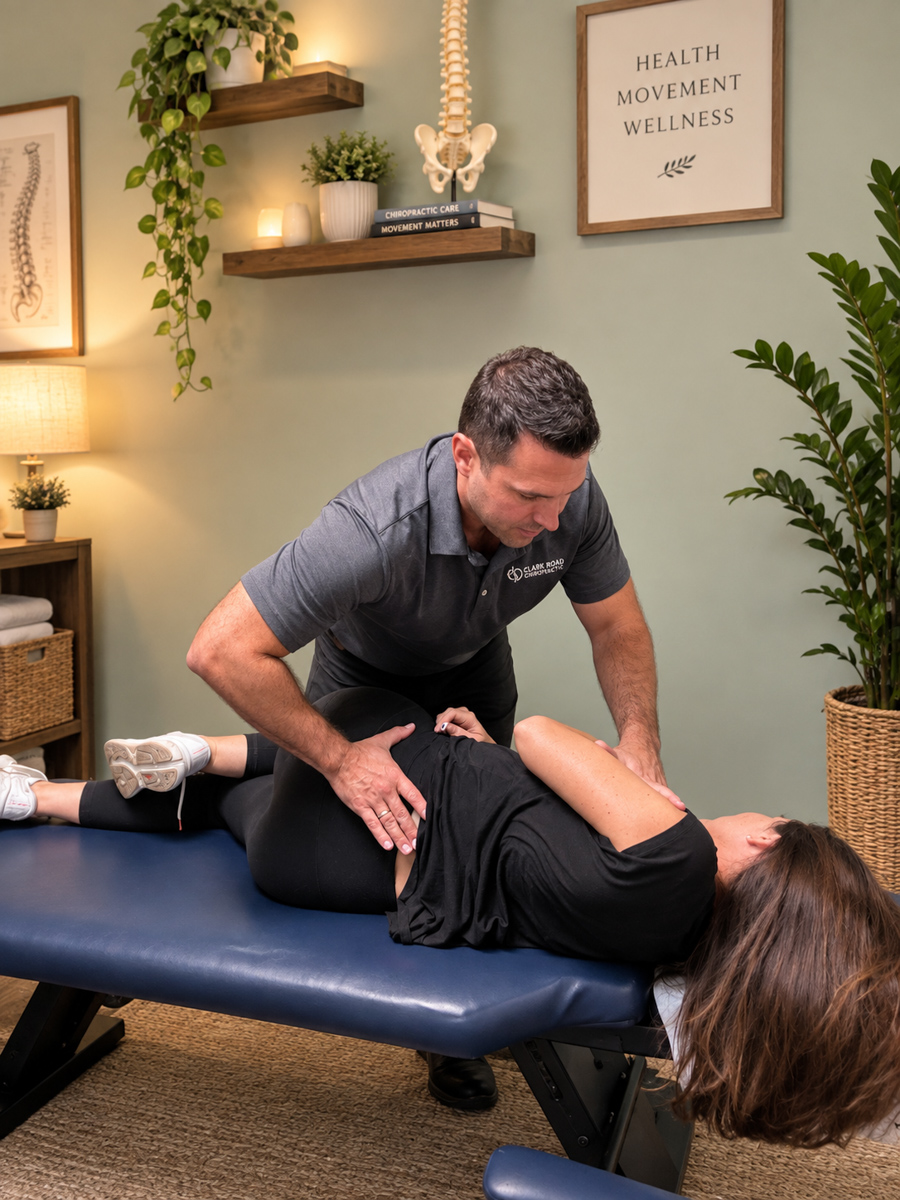
Gentle, precise chiropractic adjustments restore motion to stiff joints in the neck and upper back. If you’re apprehensive about having your neck adjusted, we offer low-force options such as Toggle Recoil and Activator that involve no twisting.
Soft-tissue work
Tight muscles pull joints back out of position, so we release them with hands-on techniques such as Active Release Technique and Graston. Many patients also book therapeutic massage with Rani for persistent neck and shoulder tension.
Posture and strength work
Once the pain subsides, we strengthen the deep neck and upper back muscles that support your head in a better position, combining targeted exercises with postural training so your neck can handle your workday on its own.
Tired of a stiff neck? Call 941-923-4357, or ask about same-day chiropractic appointments if you’re in pain today.




Desk Worker Neck Pain: Habits That Help
We see you for only a small part of your week. These changes do much of the work in between:
- Raise your screen. The top of your monitor should sit at or just below eye level.
- Center your monitor. If it sits off to one side, move it directly in front of you.
- Bring your phone up. Lift it toward eye level rather than dropping your head to look down.
- Take micro-breaks. Every half hour, roll your shoulders back and gently tuck your chin.
- Check your pillow. It should keep your neck level with your spine, neither propped up nor sagging.
Upper Back Pain Between the Shoulder Blades
The neck and upper back function as a unit. When your head drifts forward, the muscles between your shoulder blades become stretched and overworked trying to pull it back. That’s why so many desk workers feel a nagging, burning ache in the middle of the upper back by mid-afternoon.
We treat the upper back and neck together. Restoring motion to the stiff joints of the upper spine often relieves pressure on the neck, and strengthening the muscles between the shoulder blades helps you sit taller without having to think about it.
What to Expect at Your First Visit
- History. We ask about your work setup, phone and screen habits, sleep, and when the pain began.
- Exam. We evaluate how your neck and upper back move, test the nerves to your arms, and assess the muscle patterns that tell the story.
- X-rays. If they’re needed, we take them on site.
- Treatment. We begin treatment the same day when appropriate.
- A plan. You leave with a plan, including one or two habit changes you can begin right away.
Neck Pain, Shoulders, and Headaches
Neck pain rarely stays in the neck. Tension often spreads into the shoulders, and many headaches originate in the muscles and joints at the top of the neck. If headaches are part of your picture, read about our headache and migraine treatment, or browse the other conditions we help.
Neck Pain After a Car Accident
If your neck began hurting after an accident, even a minor one, it may be whiplash. Whiplash symptoms often appear a day or more later and warrant a careful exam. Learn more about our car accident chiropractic care.
When Neck Pain Needs Other Care
We screen every new patient for red flags. Dizziness, unexplained vertigo, a sudden severe headache, or numbness and weakness in the arms are evaluated carefully, and if something points elsewhere, we refer you promptly to your primary care doctor or a specialist.
Why Patients Choose Us for Neck Pain
- We find the cause. We look for the problem behind the pain, not just the sore spot.
- Gentle options. Comfortable, low-force care for patients who are apprehensive about neck adjustments.
- One coordinated plan. Massage, stretching, and adjustments work together.
- Early appointments. 7 AM three days a week, before your workday begins.
- In network with most insurance plans. Your benefits are reviewed before your first visit.
Neck Pain FAQ
Neck adjustments performed by a trained doctor are common and generally considered safe when appropriate screening is done first. We screen for red flags before treatment, and if you’d prefer a gentler approach, we offer low-force techniques that involve no quick twisting movements.
That depends on how long you’ve had the problem and how much your daily habits change. A recent flare-up often settles faster than pain that has developed over years. We’ll give you a clear plan after your exam.
It can. A pillow that’s too high, too flat, or worn out can hold your neck at an awkward angle for hours. Describe your setup or bring a photo, and we’ll help you determine whether it’s contributing to the problem.
Usually because the underlying posture and habits haven’t changed. That’s why we spend time on your workstation, phone use, and sleep setup, not only your spine.
Book your first visit, and we’ll identify what’s behind your neck pain.