


Chiropractor for Sciatica in Sarasota
Sciatica can stop you in your tracks: a sharp, burning, or electric pain that travels from the low back or buttock down the leg, sometimes with numbness or tingling in the foot. It can make sitting, standing, and sleeping genuinely difficult.
The most important thing to understand is that sciatica is a symptom, not the underlying problem. It means the sciatic nerve is being irritated, typically by imbalances in the spine, pelvis, and hips. We identify the problem, work to correct imbalances, and the symptoms improve.
Can a Chiropractor Help Sciatica?
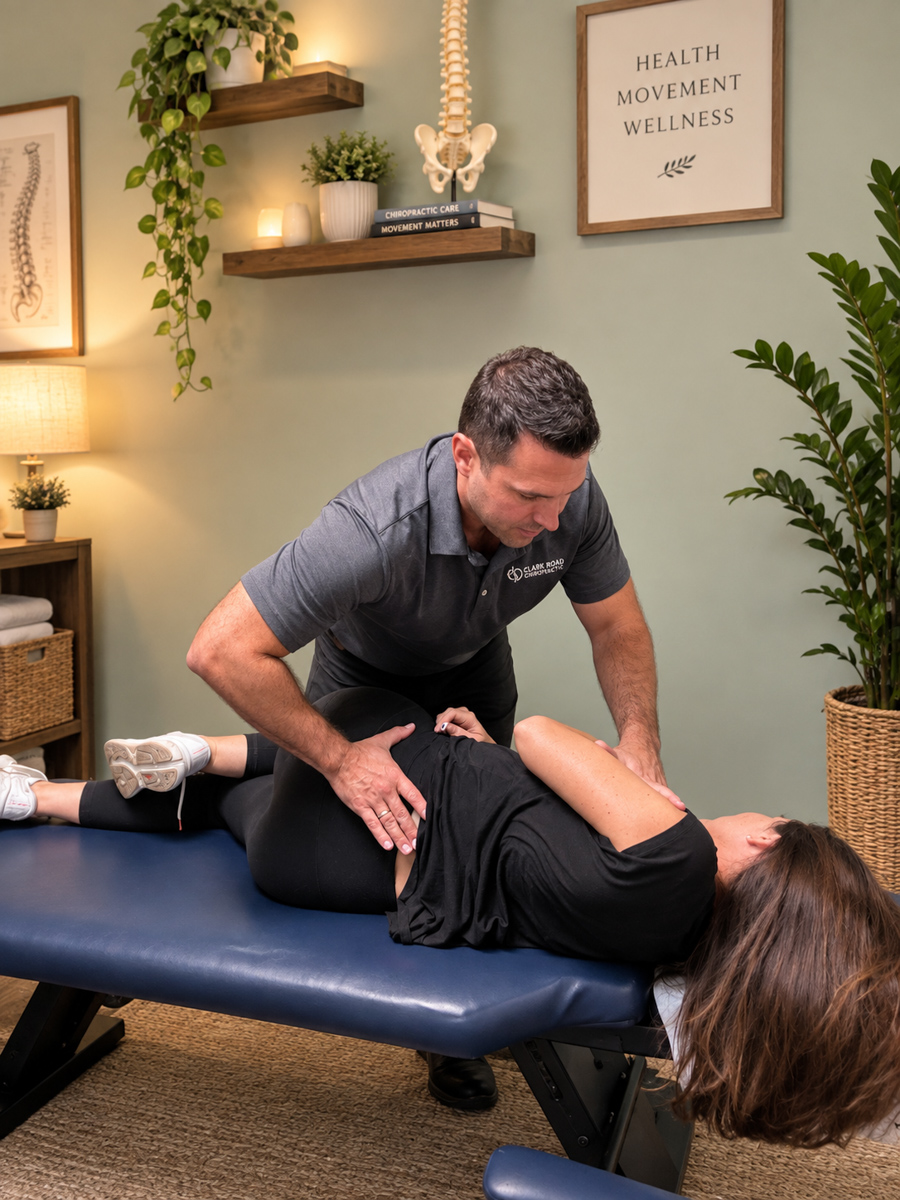
Yes, in many cases. Most sciatica originates from a problem in the low back or pelvis that places pressure on the nerve, such as a bulging disc, a stiff or irritated joint, or a tight muscle deep in the buttock. Those are precisely the structures chiropractic care addresses. By relieving the pressure and restoring normal movement, we help the nerve settle.
We’ll also be candid when sciatica requires more than conservative care. If your exam shows signs of a more serious problem, we’ll refer you promptly.
What Causes Sciatica?
The sciatic nerve is the longest and largest nerve in the body. It forms from nerve roots in the low back and travels through the buttock and down each leg. Pressure or irritation anywhere along that path can cause sciatica. The most common sources we find:
Disc problems
A bulging or herniated disc can press on a nerve root as it exits the spine. If your exam points to a disc, see our herniated disc care.
Joint irritation
Stiff or inflamed joints in the low back or the sacroiliac joint, where the spine meets the pelvis, can irritate nearby nerves.
Muscle tension
Tight muscles deep in the buttock, particularly the piriformis, can compress the sciatic nerve as it passes through.
Pregnancy
Shifting weight and loosening ligaments place added stress on the pelvis during pregnancy. Expecting mothers can learn about our prenatal chiropractic care.
How We Identify the Cause
Because the cause determines the treatment, your first visit focuses on narrowing it down.
- A detailed history. When did it begin? What makes it better or worse? Exactly where does the pain travel?
- Orthopedic and neurological testing. Specific movements and tests show whether the irritation originates from a disc, a joint, or a muscle, and assess your reflexes, strength, and sensation.
- X-rays. We take them on site when they’ll help us evaluate the structure of your spine.
- A clear explanation. We’ll tell you what we believe is causing your sciatica and why.
Dealing with sciatica right now? Call 941-923-4357, or ask about same-day chiropractic appointments.




Sciatica Treatment Options
Your plan depends on what’s irritating the nerve, and it often combines several of the following.
Cox flexion-distraction
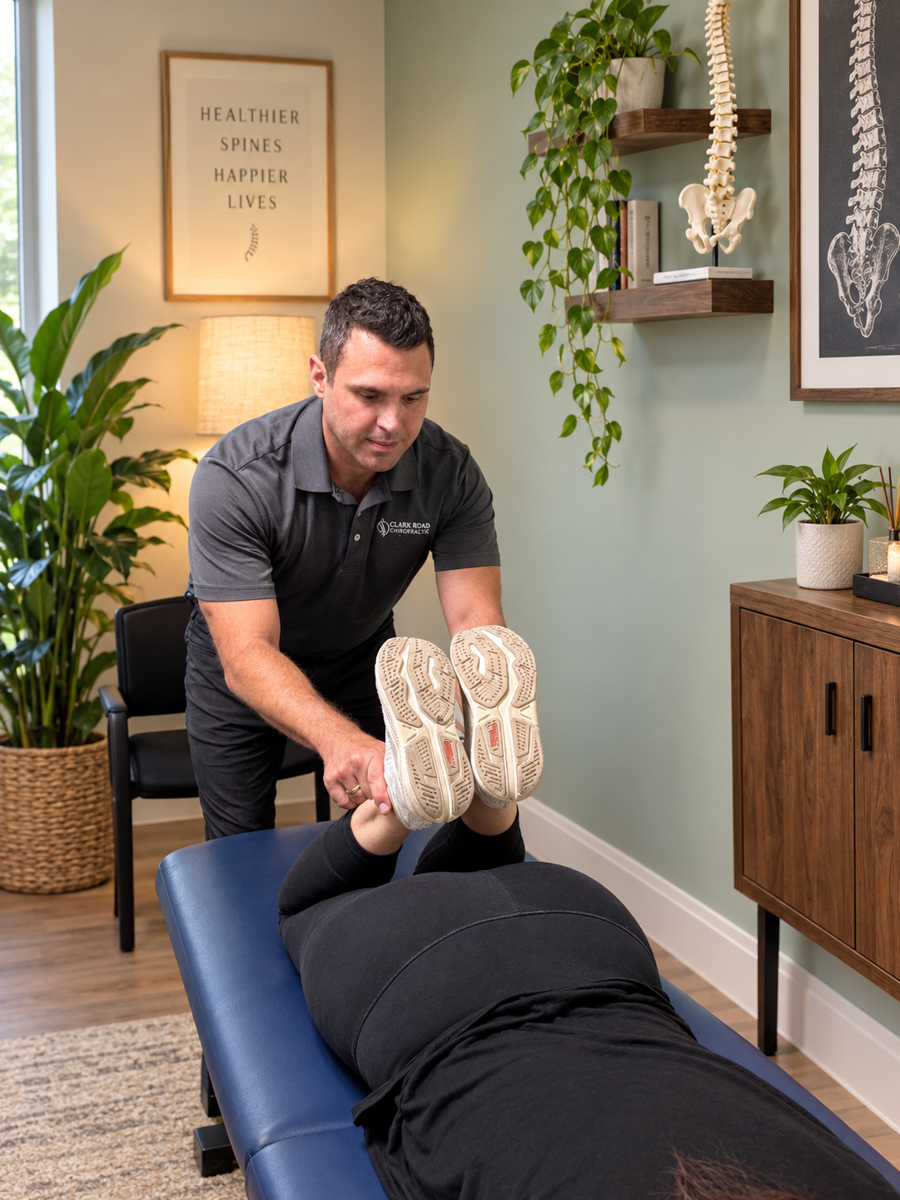
A gentle form of spinal traction performed while you lie face down on a specialized table. Its slow, rhythmic motion opens the spaces between the vertebrae and relieves pressure on irritated discs and nerve roots, making it one of our primary tools for sciatica.
Chiropractic adjustments
Restoring motion to stiff joints in the low back and pelvis can relieve the irritation affecting the nerve. When the area is inflamed, we choose gentle, low-force chiropractic adjustments.
Soft-tissue work and moist heat
Releasing tight muscles in the buttock and hips relieves pressure on the nerve where it passes through them, and moist heat helps those muscles relax before treatment.
Acupuncture for pain
Both of our doctors are board certified in acupuncture, which can help calm nerve pain during the early phase of care. Acupuncture is a self-pay service at our office.
Stability exercises
Once the pain subsides, we strengthen your core and hips so your low back is better protected and sciatica is less likely to return.
Pinched Nerve Treatment
“Pinched nerve” is a common way of describing nerve irritation. Patients typically experience sharp or burning pain, pins and needles, or a limb that feels weak or heavy. It isn’t limited to the leg; nerves exiting the neck can also become irritated, causing pain, tingling, or numbness down the arm. We use the same approach for both: locate where the nerve is being irritated, relieve the pressure, and restore healthy movement so it stays that way.
If you’re experiencing arm symptoms along with neck stiffness, mention it when you book so we can plan your exam accordingly.
Easing Sciatica Between Visits
What you do at home can either calm the nerve or keep it irritated. Depending on what we find, we may recommend:
- Limit prolonged sitting. Sitting often places the most pressure on irritated discs and nerves. Stand and walk for a minute or two every half hour.
- Remove your wallet from your back pocket. Sitting on it tilts the pelvis and can press on the nerve.
- Sleep in a supported position. A pillow between the knees when lying on your side, or beneath the knees when lying on your back, often helps.
- Avoid aggressive stretching for now. Forceful hamstring stretches can aggravate an irritated nerve. We’ll show you gentler alternatives.
- Use ice for flare-ups. Apply it during the first day or two, then follow our guidance on heat.
Sciatica Warning Signs
Some symptoms require emergency care first. Go to the emergency room or call 911 if leg pain is accompanied by:
- Loss of bladder or bowel control
- Numbness in the groin, inner thighs, or buttocks
- Rapidly worsening weakness in one or both legs
Sciatica and Low Back Pain
Sciatica often appears alongside low back pain, but the two aren’t the same. Back pain without leg symptoms usually has a different cause and requires a different plan. Read about our low back pain treatment, or browse the other conditions we help.
Why Patients Choose Us for Sciatica
- We look for the cause. Your treatment matches what’s actually irritating the nerve.
- Cox flexion-distraction on site. One of the gentlest ways to relieve pressure on a disc.
- Acupuncture in the same office. Our board-certified doctors can use it to help with nerve pain.
- Same-day treatment. We begin treatment the same day as your exam when appropriate.
- In network with most insurance plans, including Medicare. Your benefits are reviewed before your first visit.
Sciatica FAQ
That depends on the cause and how long you’ve had it. Some flare-ups settle within a few weeks of care, while long-standing or disc-related sciatica can take longer. We’ll give you a realistic plan after your exam and update it as you improve.
Gentle movement, such as short walks, usually helps more than bed rest. We’ll show you which positions and activities ease your symptoms and which to avoid for now.
Not usually at the outset. Most sciatica can be evaluated with a careful exam and X-rays. If your symptoms are severe, worsening, or not improving with care, we’ll refer you for advanced imaging or a specialist’s opinion.
It can, particularly if the underlying cause isn’t addressed. That’s why the final phase of care focuses on strength, stability, and the daily habits that place pressure on your back.
You don’t have to keep living with pain that runs down your leg. The sooner we identify what’s irritating the nerve, the sooner we can begin relieving the pressure.